

Insights to KommMa-Project, Part 2
The collaborative project "Municipal Climate Mitigation" (KommMa) is developing a concept and a web application for the implementation of climate protection measures. The application is specifically tailored to municipalities to effectively support them in achieving their climate protection goals. Four KIT institutes are collaborating on KommMa in an interdisciplinary manner. We will gradually introduce them and their project responsibilities in more detail.
In this article, we introduce Moritz Fierke. He is a scientist in the “Resilient Systems and Risk Management” research group at the Institute for Industrial Production (IIP).
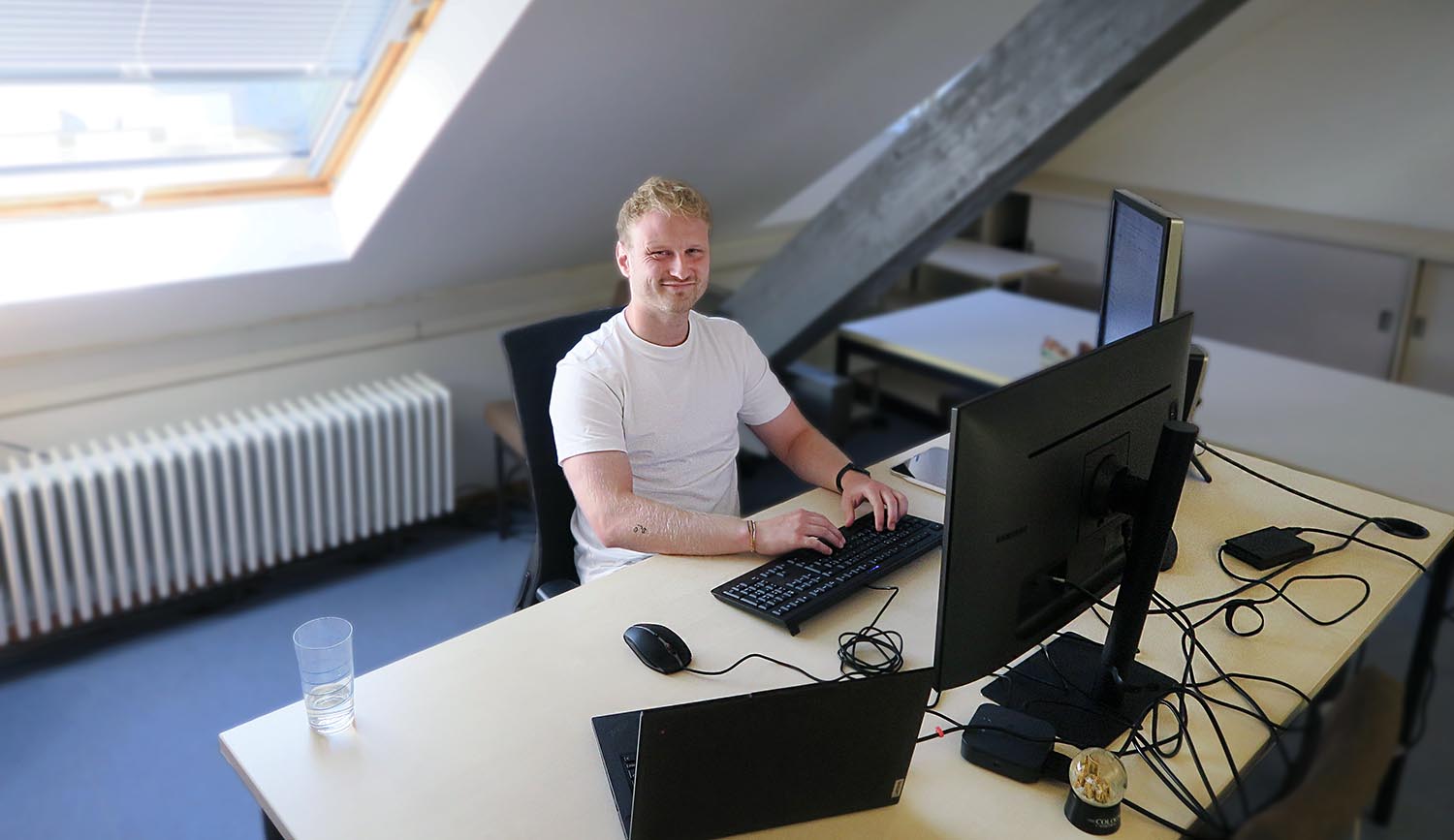
Hello Moritz, please give us a brief introduction to the IIP. What research questions are you exploring?
At the institute, we address issues related to two major topics: production and energy. For example, we focus on the integration of renewable energy, the planning of future-proof systems, and sustainability in value chains. In many research projects, we collaborate with partners from the industry to ensure our work is as solution-oriented as possible – just as we do here at KommMa.
This often involves questions such as: How should a supply chain or energy system be structured today to ensure it continues to function in the future? How do you plan and design it, and how can certain risks be minimized early on?
What are your responsibilities in the KommMa project?
My main focus is on the implementation and maintenance of the web tool. This involves a lot of backend programming. Together with the team, I’m figuring out what the tool should look like and how it should be used. It’s also about determining what data should be collected and how it should be efficiently stored in a database.
In the previous project phase, I also helped create the first non-web-based prototype and the web-based prototype together with the students.
How important is the exchange with the other institutes and the advisory board to you in this project?
We benefit enormously from this regular exchange. Since we have to start thinking early on about how the web tool will be used in practice later on. Above all, it’s great to get feedback from the advisory board and the mentors – that is, from the people who will actually be using the tool later on. This allows us to focus more specifically on certain aspects and further develop the tool to meet the needs of the target audience. This practical focus is what makes KommMa so special. I see the tool as a great way to support municipalities on their path toward greater climate protection without requiring them to allocate additional resources.
Thank you very much for the interview!