

Insights to KommMa-Project, Part 1
The collaborative project "Municipal Climate Mitigation" (KommMa) is developing a concept and a web application for the implementation of climate protection measures. The application is specifically tailored to municipalities to effectively support them in achieving their climate protection goals. Four KIT institutes are collaborating on KommMa in an interdisciplinary manner. We will gradually introduce them and their project responsibilities in more detail.
First, we’re speaking with Dr. Magdalena Vallon, a scientist at the Institute of Meteorology and Climate Research Troposphere Research (IMKTRO). Her focus within KommMa is water.
Hello Magdalena, what exactly is the IMKTRO researching, and what is your role in the project?
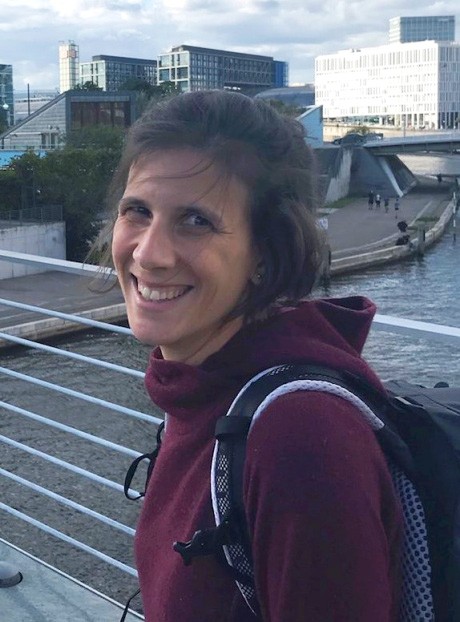
The IMKTRO is one of a total of four Institutes of Meteorology and Climate Research at KIT. We study the atmospheric processes that influence our weather and climate. Through our research, we aim to better understand changes in weather and climate, make more accurate forecasts, and develop appropriate measures, such as those for climate adaptation.
In the KommMa project, I’m focusing in particular on water-related aspects in the municipal context. As a chemist, I’m particularly interested in the processes that take place in wastewater treatment plants, pumping stations, and swimming facilities. Operating such facilities is quite energy- and cost-intensive, which is why I’m investigating which energy-saving measures are possible and which processes can still be optimized.
What appeals to you most about working on this project?
I love seeing how research findings translate into practical applications. Municipalities play a central role in climate protection because they have great potential to make a positive impact right on our doorstep, for example, in divisions like urban planning, transportation, or energy supply. When these measures are implemented effectively, a municipality can make a big difference and inspire many people. I also find it exciting to collaborate with institutes from other departments.
Why is interdisciplinary collaboration crucial in KommMa?
Climate change occurs on many levels. Because of the project’s multi-layered nature, we can give equal consideration to various divisions: water, mobility, and energy. That’s really special, because projects often focus on just one aspect. In KommMa, we can link multiple aspects together and establish connections. After all, everything is ultimately interconnected. This kind of close exchange and collaboration is a real asset — not just for KommMa, but for me personally as well!
Thank you very much for the interview!